
Class description
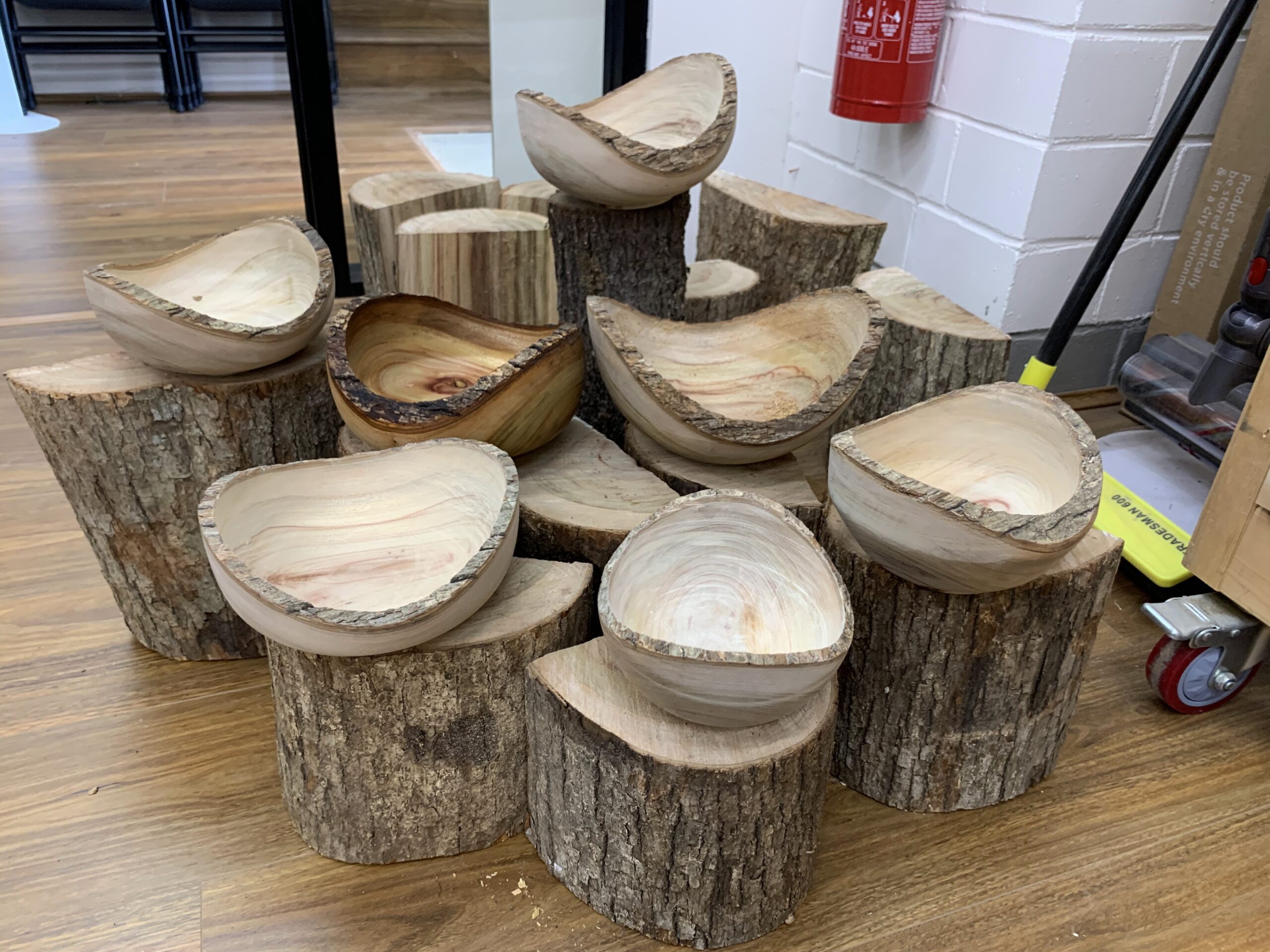
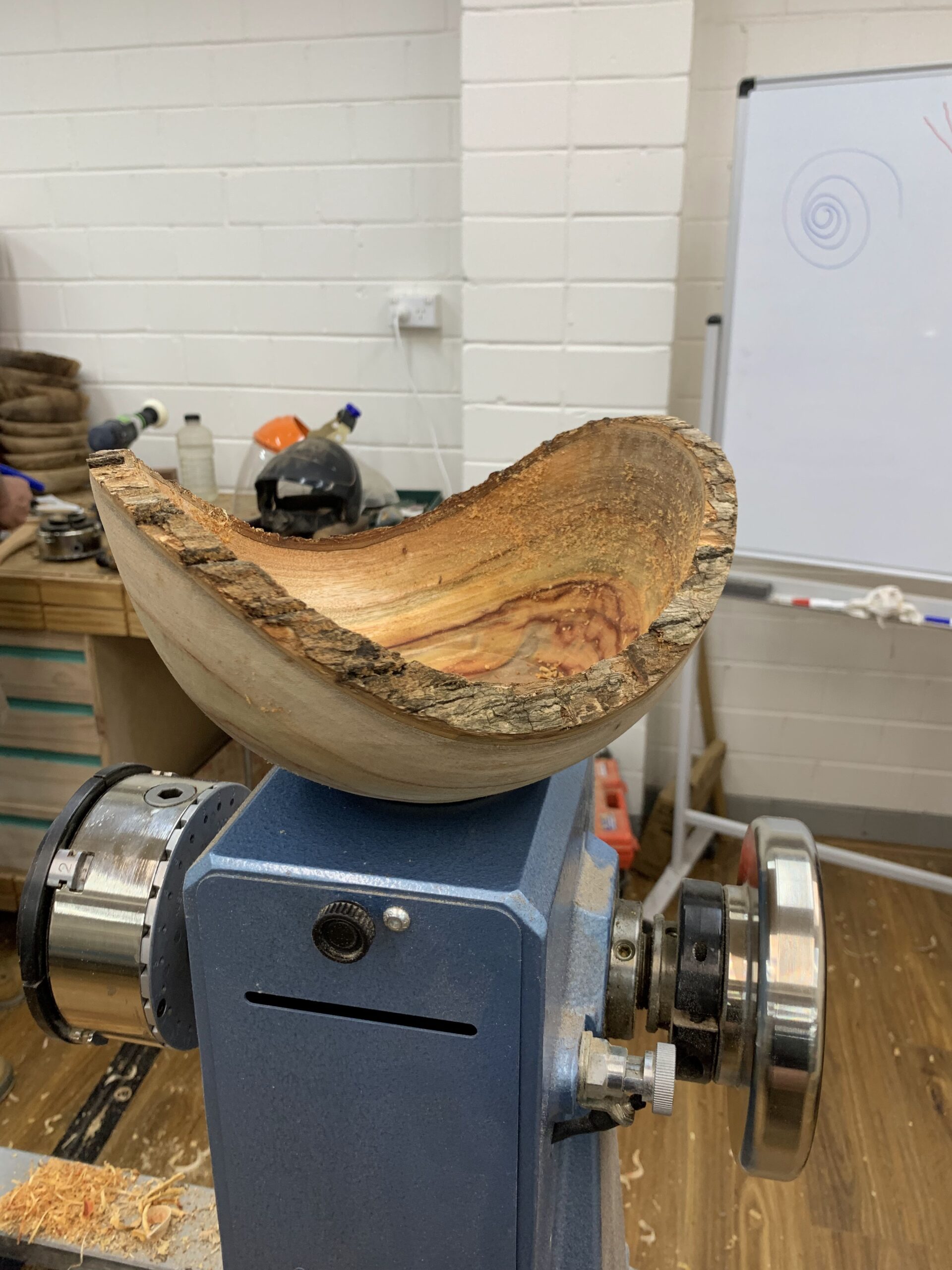
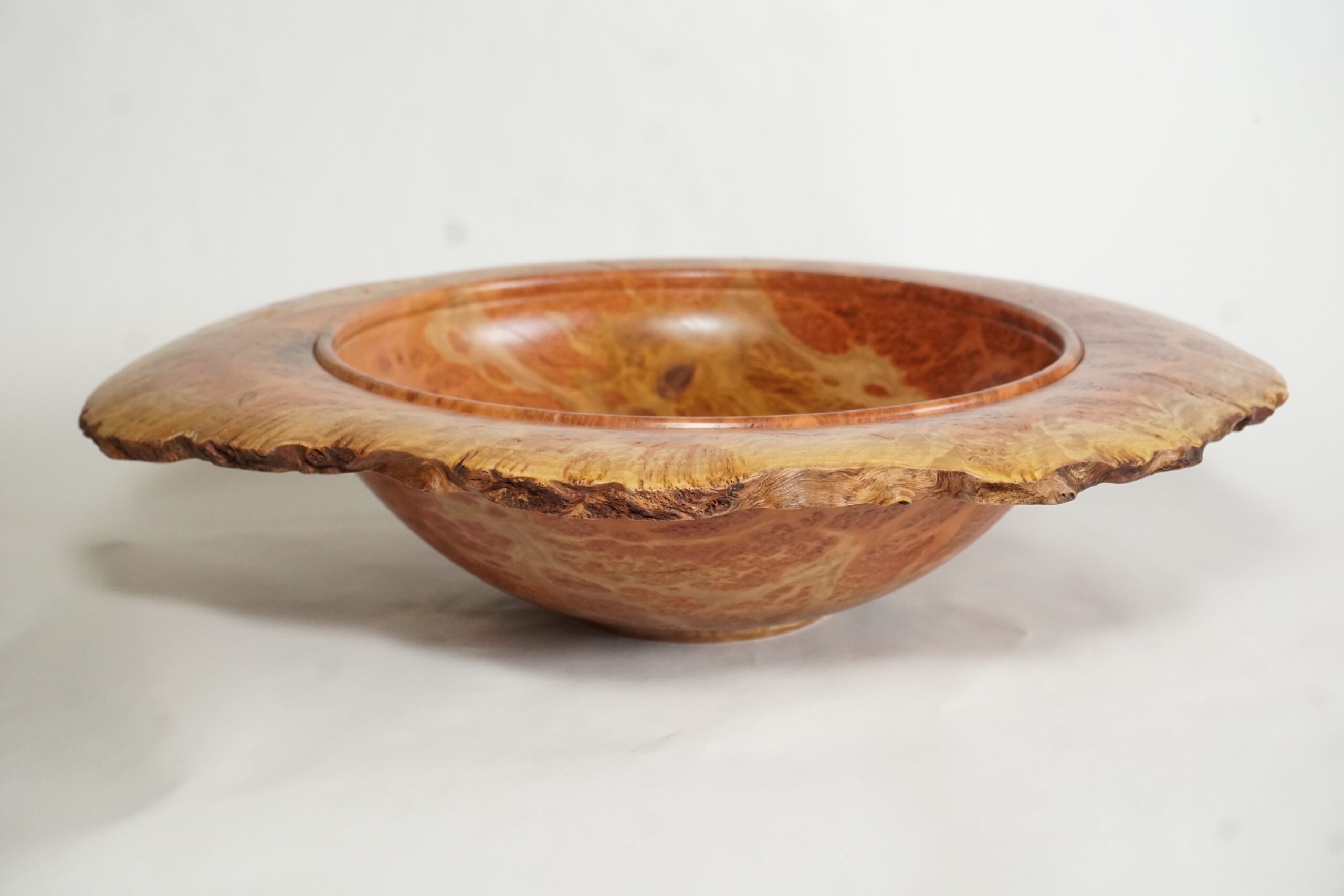
A natural edge bowl keeps the live edge of the tree, bark and all, running right around its rim, so no two pieces are ever the same. Turning one means working an uneven, interrupted surface where the timber meets open air on every revolution. That is what gives the form its character, and it is what makes a natural edge bowl a genuine step up from a standard bowl.
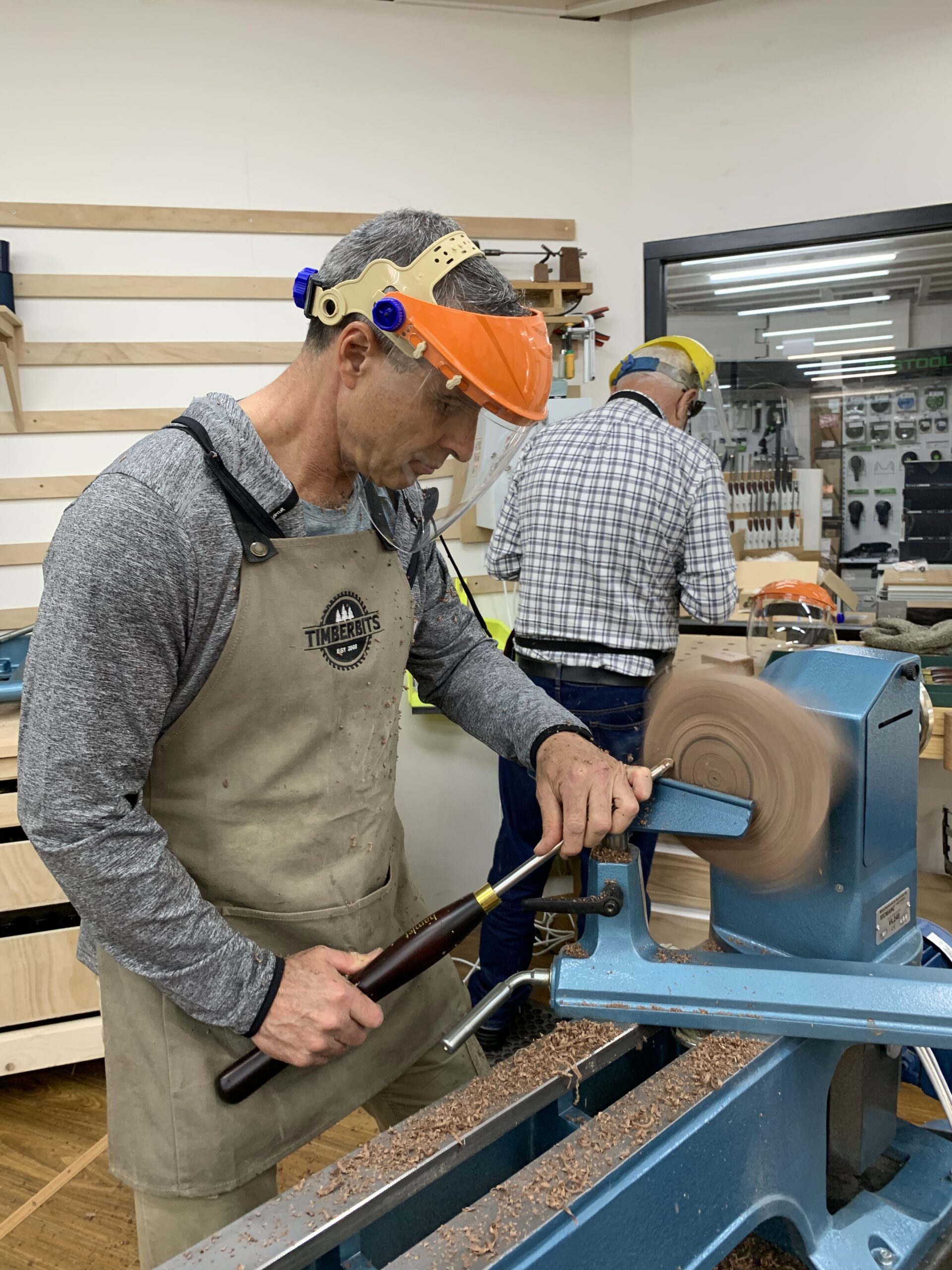
This two-day workshop is built for turners who already have the fundamentals. Across the weekend you will turn two pieces: a square edge bowl to lock in your ghosting and bevel work, then a natural edge bowl turned straight from the log with the bark preserved. You will cover blank preparation, mounting for balance, riding the bevel, hollowing to an even wall thickness, and finishing.
This is an intermediate class for turners who have already turned bowls. It is not a first class on the lathe. Before booking, you should already be comfortable at the lathe: setting it up, controlling your tools through the key cuts, and shaping and refining a bowl with a gouge. That is the ground our Introductory Woodturning Workshop covers. If you have not turned a bowl yet, start there or with Five Days of Turning first, then come back to this one.
Why You’ll Love This Class
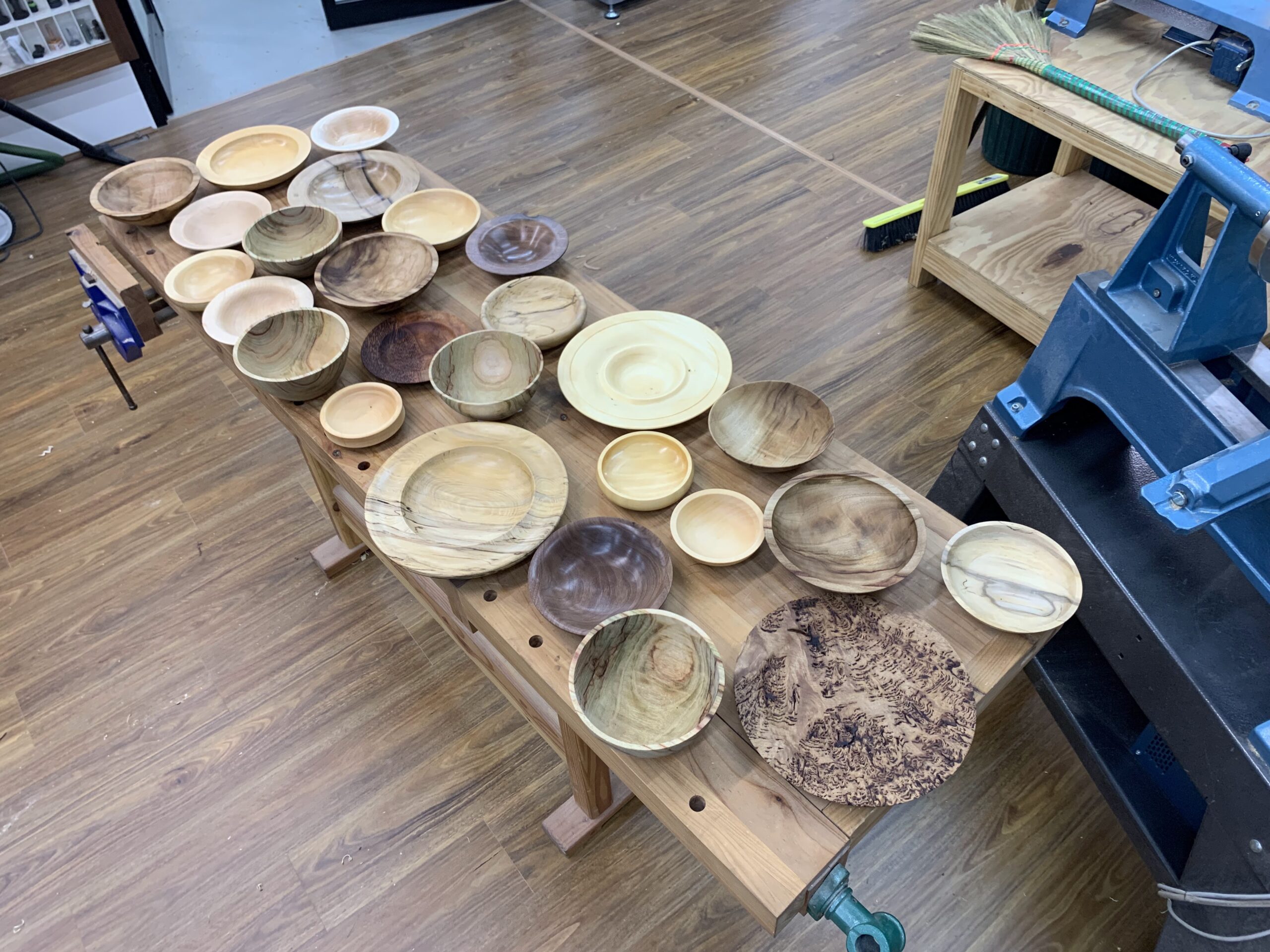
- Two finished bowls, two techniques. You leave with a square edge bowl and a natural edge bowl, having worked both a solid rim and a live bark edge.
- Real control over the interrupted cut. Ghosting and bevel work on an uneven edge is where tool control is made or lost. You will drill it under guidance until it feels natural.
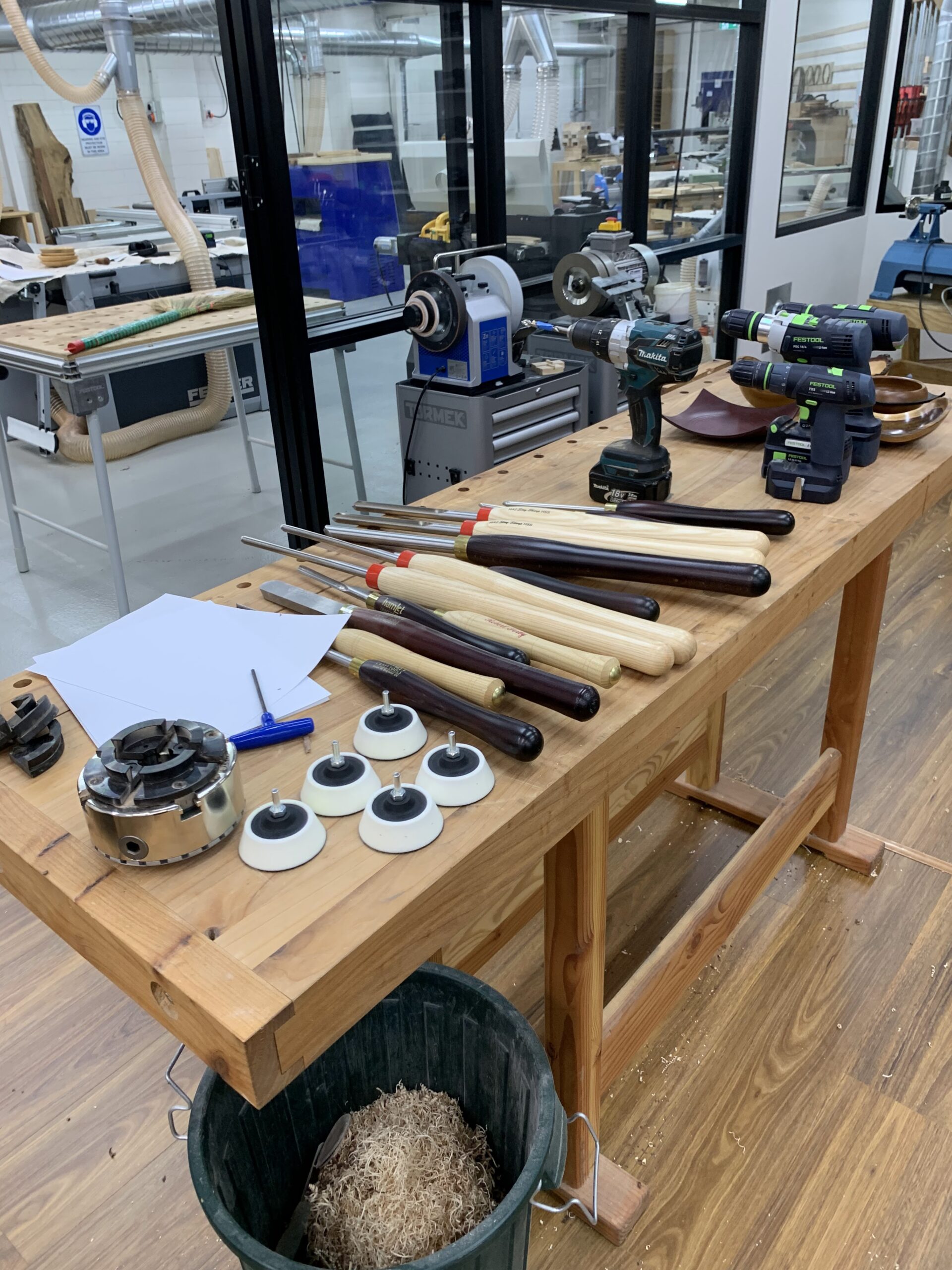
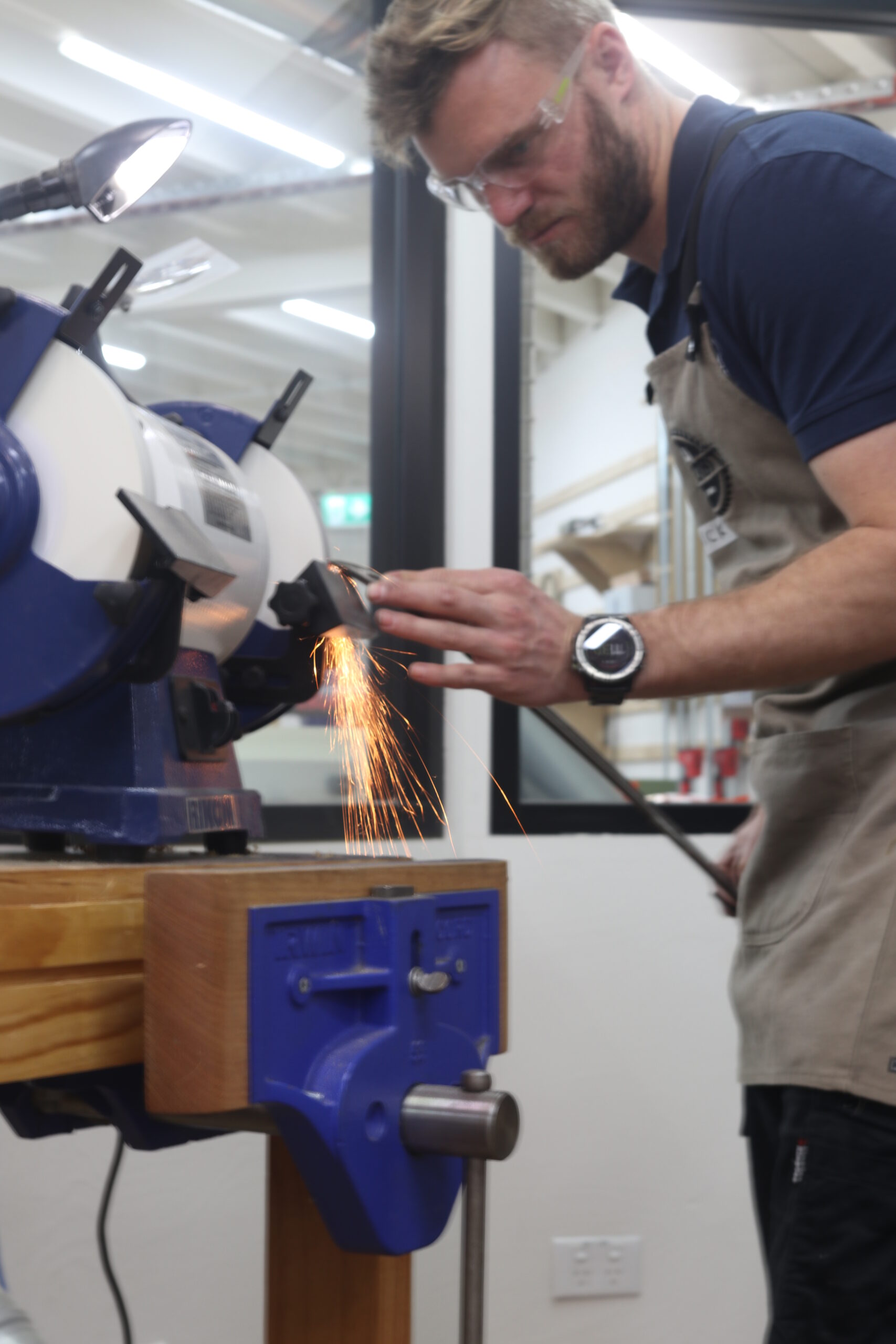
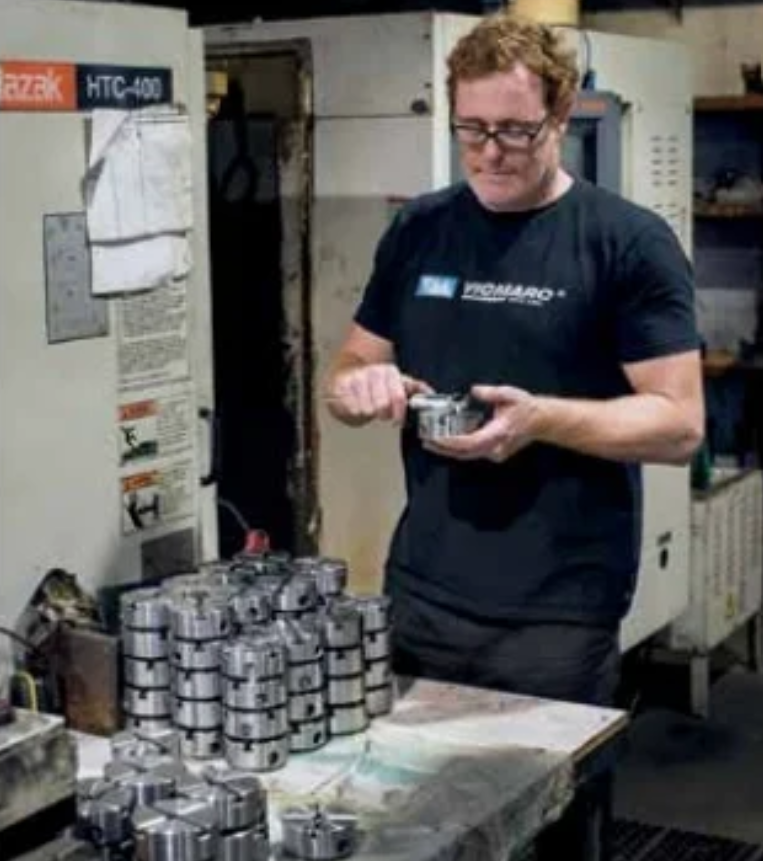
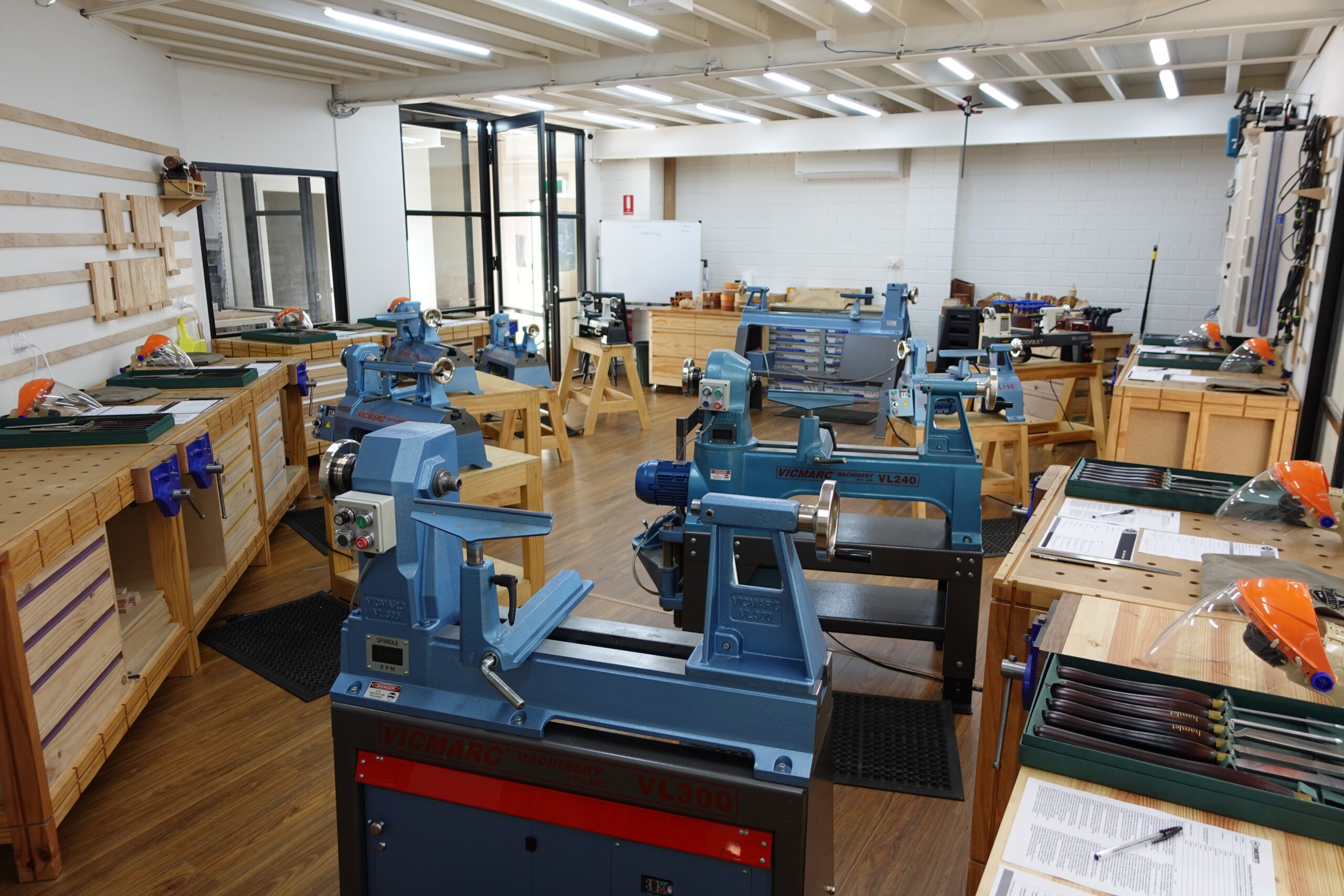
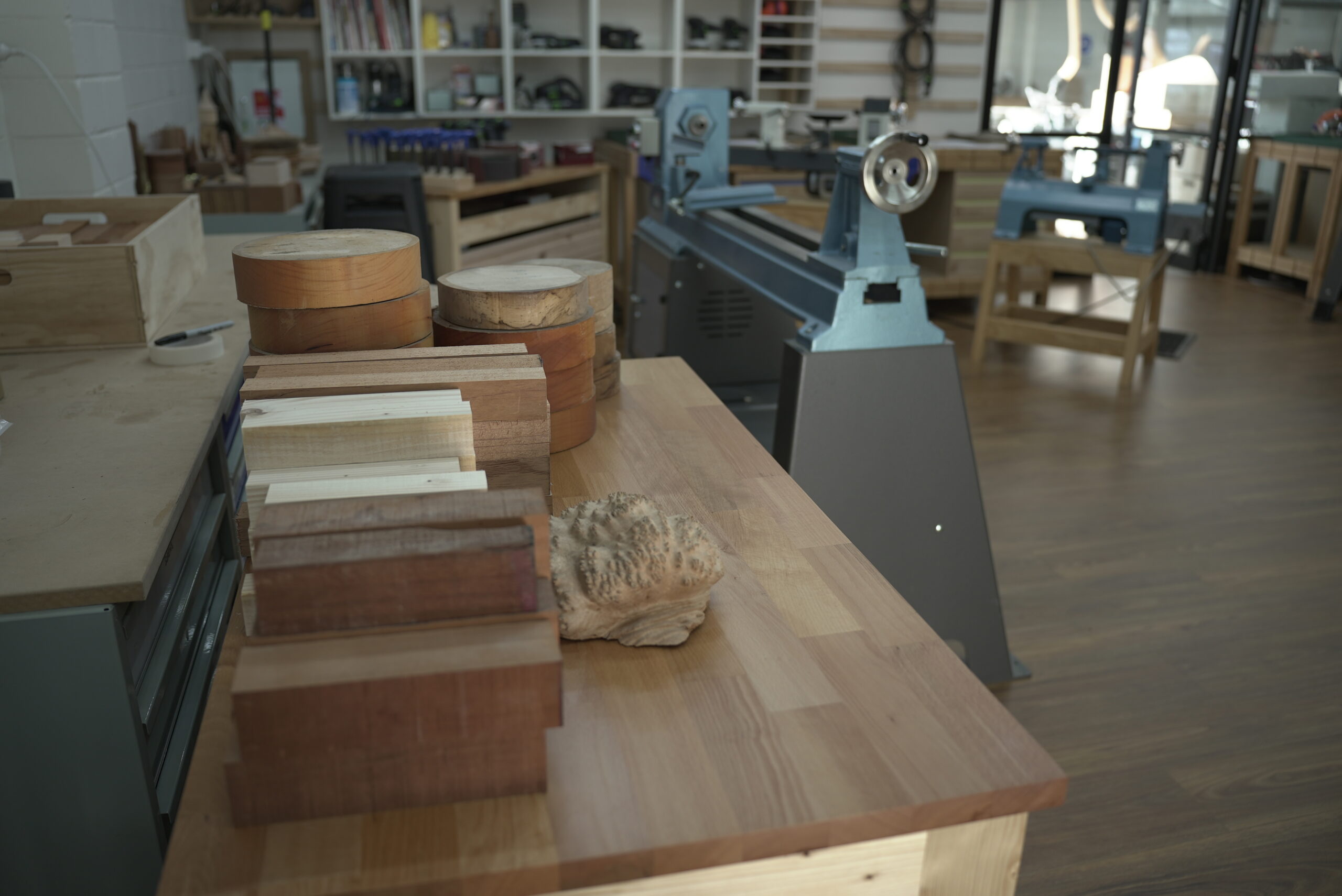
- Work with quality gear. Each turner has their own lathe, with bowl gouges, a skew and Vicmarc chucking on hand. Bring your own tools too if you would like to dial them in.
- Timber straight from the log. You will learn to read a log, find its centre, and cut a blank that holds its balance and keeps its bark.
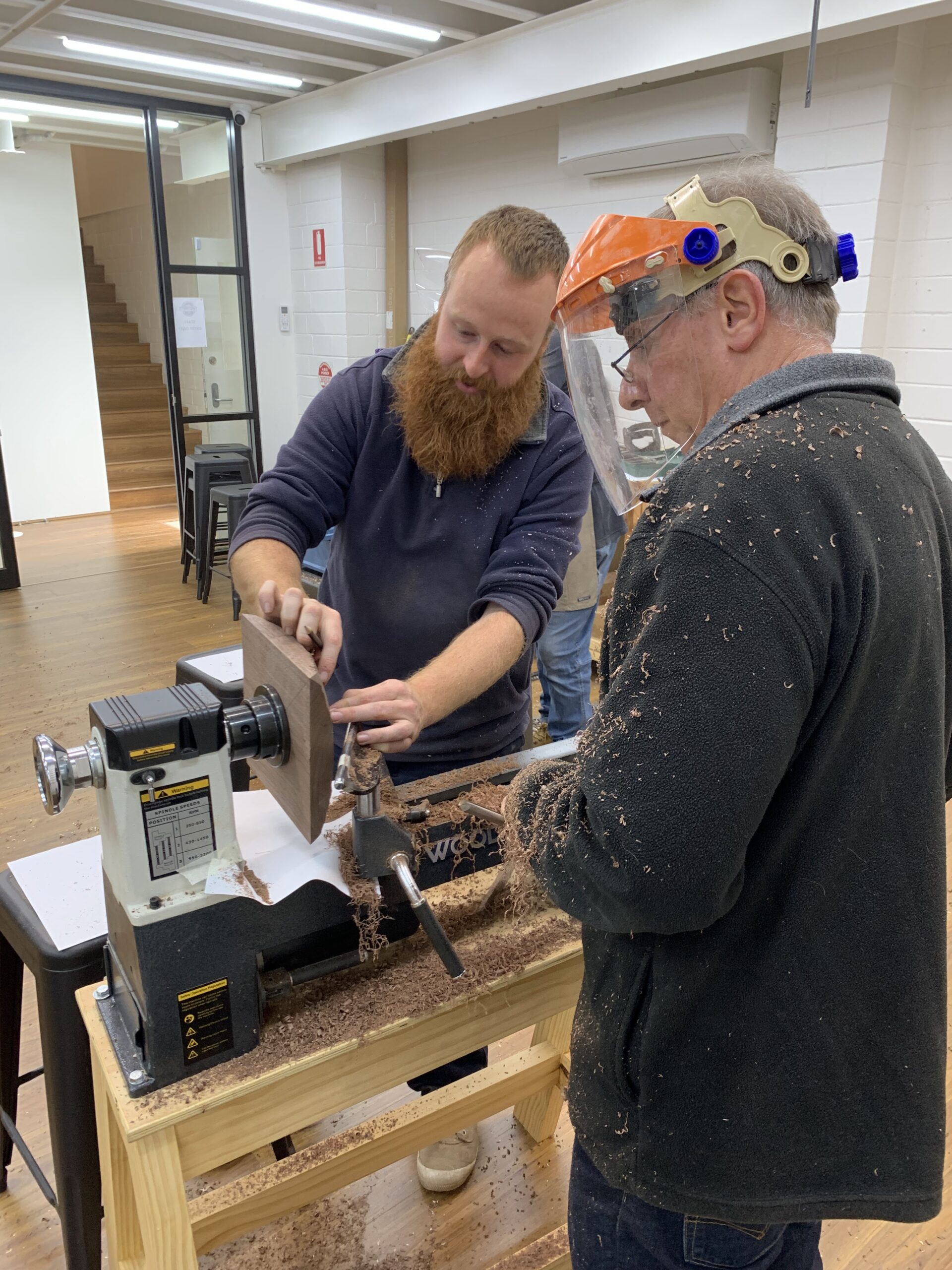
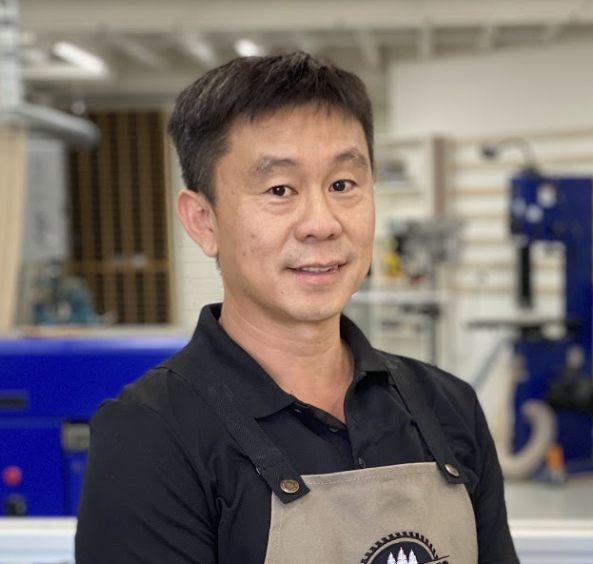
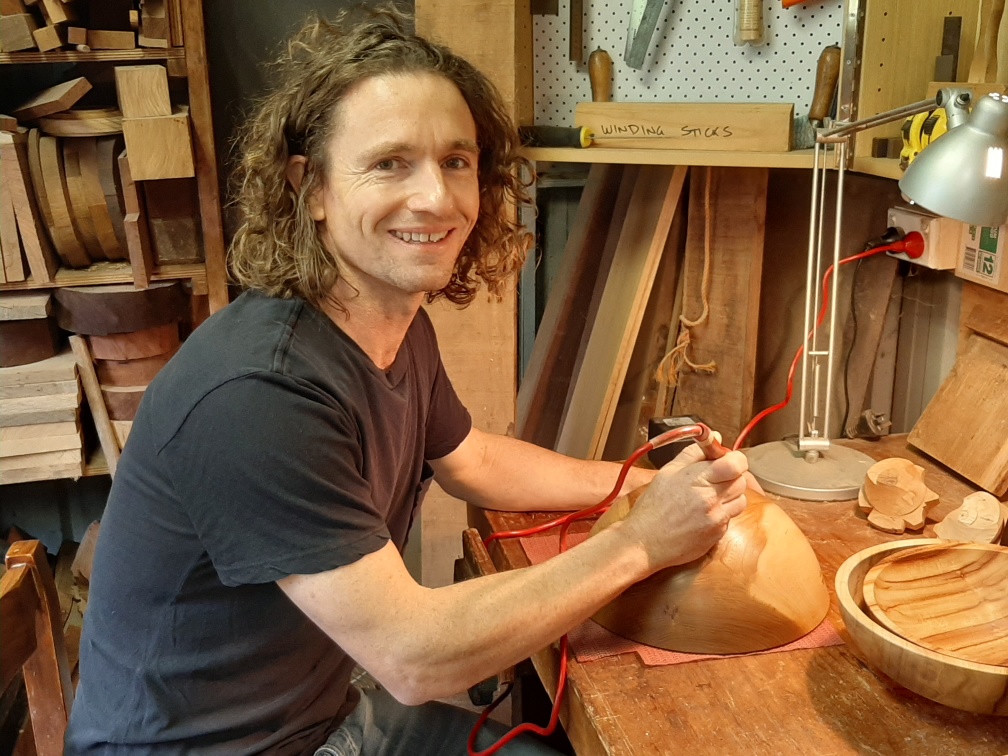
- Guidance from an experienced turner. You will get hands-on feedback from a working woodturner who knows how to get the most out of an interrupted cut.
Learning Outcomes
By the end of the two days, you will be able to:
- Prepare blanks for both square edge and natural edge bowls
- Mount a blank so it runs centred and balanced
- Ride the bevel and control ghosting cuts on an uneven edge
- Hollow a bowl to an even wall thickness
- Cut and balance a natural edge blank from a log while preserving the bark
- Sand and finish both a square edge and a natural edge bowl
Course Content and Structure
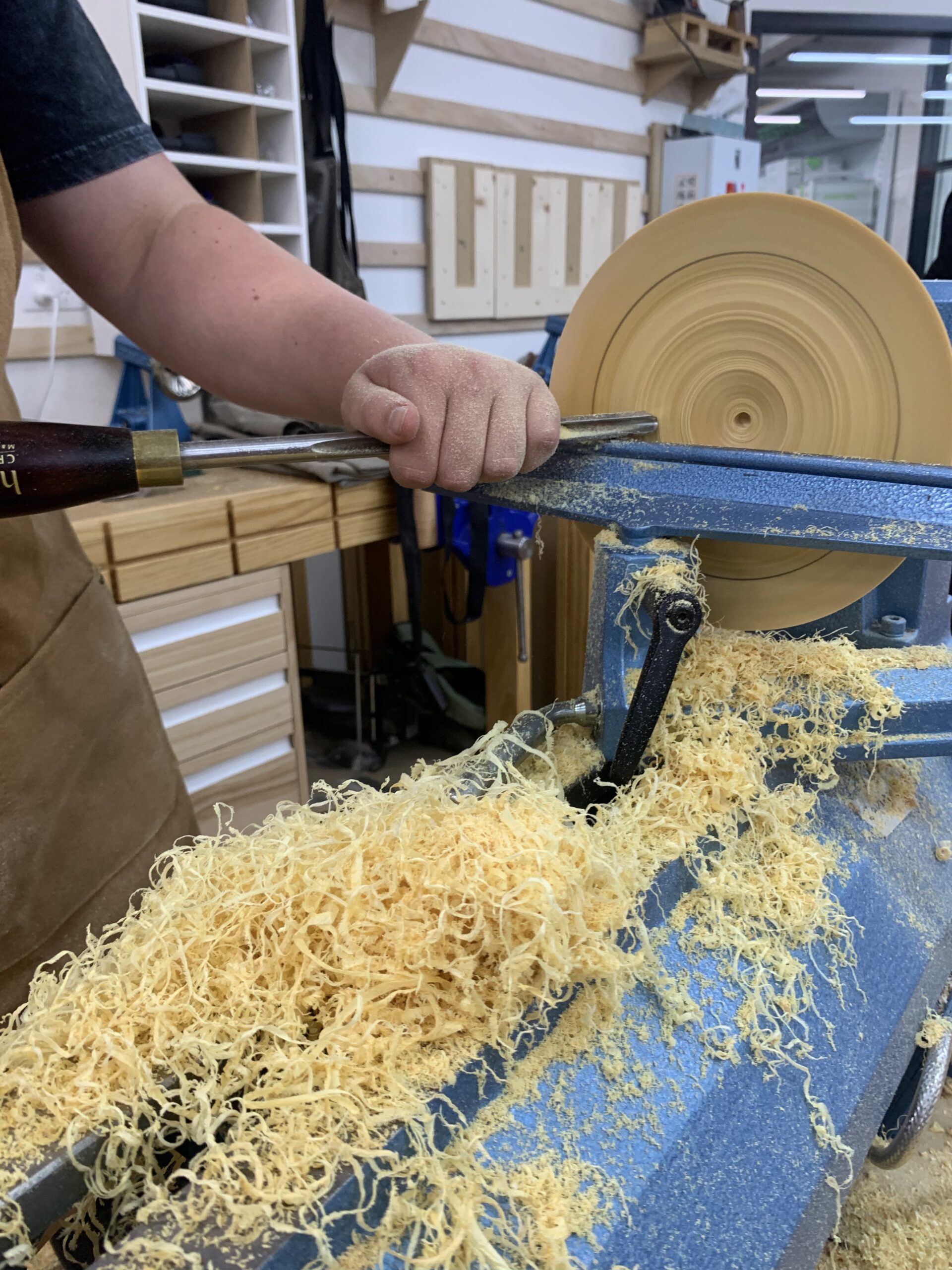
You will start with the lathe itself, the safety basics, and what sets a natural edge bowl apart from a standard form. From there it is straight to the timber: marking out and drilling a square bowl blank, mounting it on a screw chuck, and shaping the back while you practise ghosting cuts, with masking tape on the tool rest to mark the edge. You will size and shape the foot, then reverse the piece to hollow the inside and bring the walls to an even thickness, adding beads or grooves if you want them.
With the square bowl behind you, you move to the natural edge piece. This is where you learn to cut a log to length, find centre, drill for a drive centre, and find the balance point in an unbalanced blank. The cuts are similar to what you have already practised, but now you are working to preserve the bark, which means turning in the right direction and reading the timber as you go.
Throughout, the focus is on understanding why each cut works, not just getting through the project. Bevel contact, tool presentation and lathe speed are the things that carry over to every bowl you turn after this, natural edge or not.
Tools You’ll Use
You will work with bowl gouges in both a fingernail and a bottom-bowl grind, a skew chisel for scraping and sizing the foot, and a screw chuck and Vicmarc chuck for mounting. Sanding is done with abrasive discs on the lathe, and finishing covers oils and waxes such as a shellawax cream and a traditional wax. Each turner has a lathe and the core tools on hand, and you are welcome to bring your own gouges and chuck to get accustomed to them.
Hands-On Experience
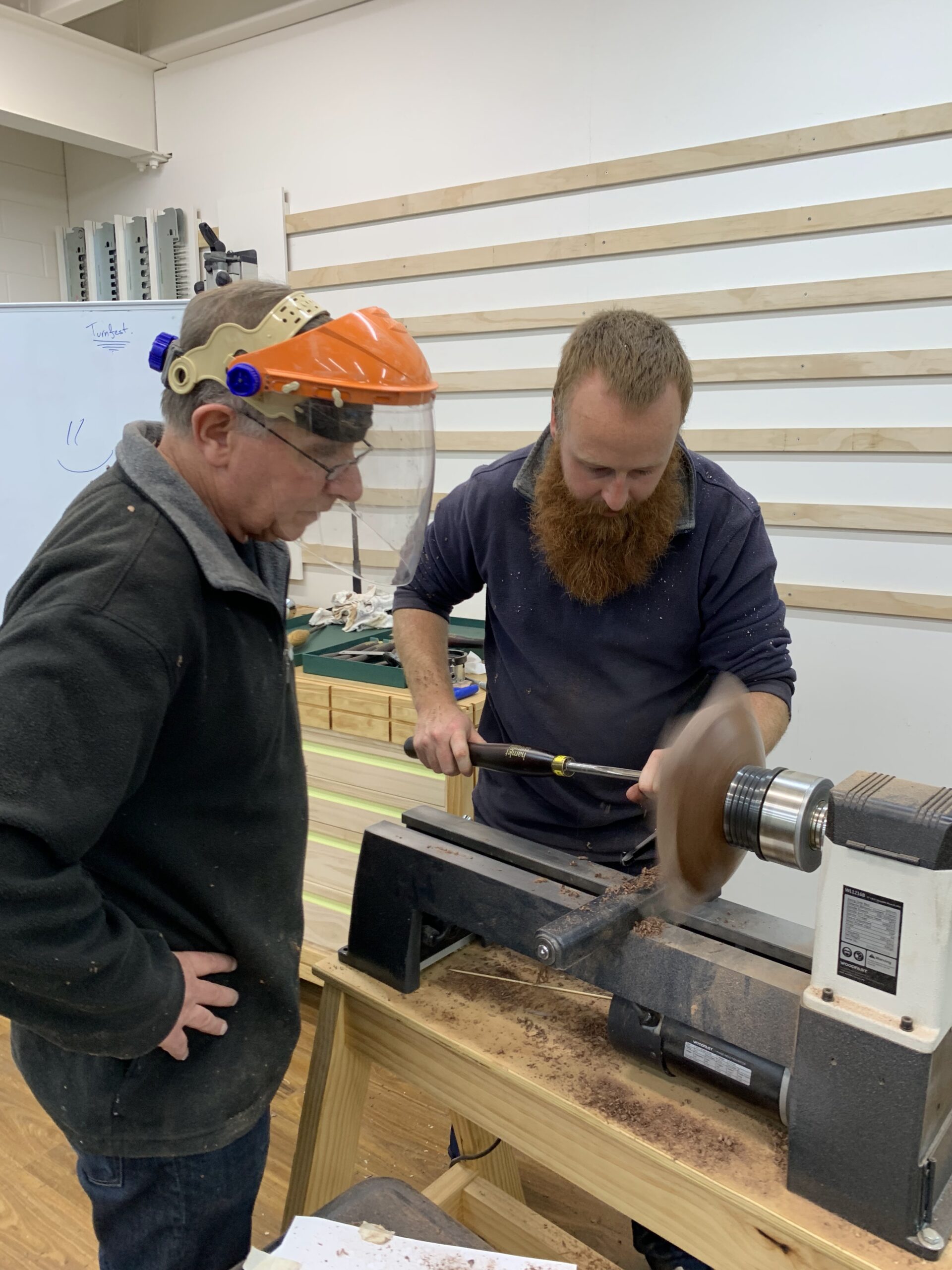
This is a hands-on workshop from the first session. You are at your own lathe turning real timber, with your instructor moving between stations giving direct feedback as you cut. An interrupted edge does not forgive a rushed cut, so the personal guidance is where the class earns its keep.
Join Us and Refine Your Craft
Natural edge turning is one of those skills that changes how you look at a log. Bring the fundamentals you already have, give the live edge a crack, and walk out with two bowls and a real handle on the interrupted cut. Book your spot now.